
Read Time: 9 min
When a structure fails, it rarely starts at the roof. It starts at the bottom — with a footing that wasn’t deep enough, a base that wasn’t compacted, or concrete that was poured too thin. Whether you’re building a pole barn, a garage, a home addition, or a deck, the footings and foundation are the part of the job that nobody sees and everybody depends on.
If you’re planning a build in Central Missouri, you need a contractor who understands local soil conditions, frost depth requirements, and how to do the sub-surface work correctly the first time. Hoover’s Bobcat Service provides complete concrete services — including footings, foundations, slabs, and flatwork — for homeowners and builders throughout the region.
This guide explains how concrete footings and foundations work, what the process looks like from first call to final walkthrough, and how to know when you’re working with a crew that actually knows what they’re doing.
Concrete footings and foundations are the structural base of any build. Cutting corners here leads to settling, cracking, and costly repairs down the road.
Key Takeaways:
A footing is a widened concrete base that transfers the load of a structure down into stable soil. Without it, the weight of a building concentrates on a small surface area, and even firm ground can compress unevenly over time – causing the structure above to settle, rack, or crack.
Footings distribute that load across a broader footprint. The wider and deeper the footing, the more surface area it contacts, and the more resistance it provides against downward movement and frost-driven uplift.
Foundation walls sit on top of footings. Together, they form the full structural base – footings carry vertical load, and the foundation wall provides lateral support and defines the perimeter of the structure.
Not every build needs the same footing type. The right choice depends on your structure, your soil, and what you’re building on.
Strip footings (also called continuous footings) run in a continuous line under load-bearing walls. They’re the standard choice for garages, home additions, and barn walls. Typical dimensions are 8–12 inches thick and 16–24 inches wide, depending on the load above.
Spread footings are isolated square or rectangular pads placed under individual posts or columns. They’re common in deck construction and pole building foundations. Each pad is sized based on the load it carries and the bearing capacity of the soil.
A slab-on-grade combines the footing and floor into a single poured concrete element. The perimeter is thickened to act as the footing, and the interior slab provides the floor. This is a common choice for garages, workshops, and outbuildings across Central Missouri.
When a build sits on sloped ground – common on rural Missouri properties – stepped footings follow the grade in horizontal increments rather than angling with the slope. Each step must maintain minimum depth requirements, and the horizontal run between steps is governed by code.
In Central Missouri, the frost line – the depth at which the ground freezes during winter – erved to ensure structural stability and prevent issues such as frost heave, foundation cracking, and structural damage.
Local building authorities determine the final footing depth requirements based on the International Residential Code (IRC) and the specific frost line depths applicable to each jurisdiction[1]. Compliance with these local building codes is essential for a safe and durable foundation.
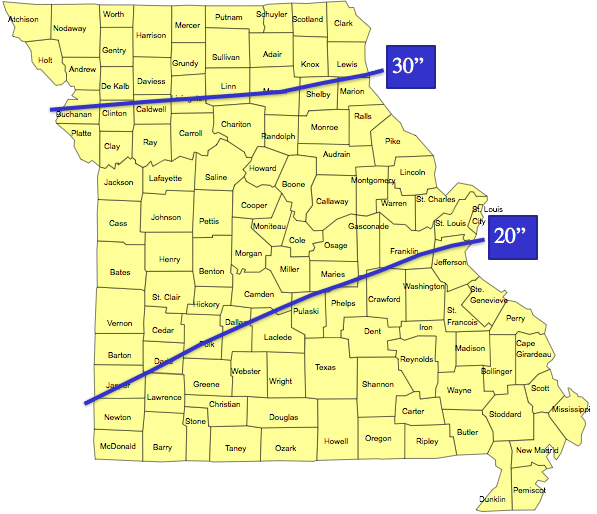
When soil freezes, it expands. Any footing poured above the frost line will experience frost heave – upward movement driven by frozen ground pushing against the concrete[2]. Even a half-inch of heave can crack foundation walls, knock posts out of plumb, and cause door frames to bind.
Footings poured below the frost line sit in soil that doesn’t freeze. They stay put year-round. That’s the whole point.
Hoover’s Bobcat Service follows frost depth requirements on every pour. We don’t cut corners on depth, because the consequences show up in the first hard winter – and they’re expensive to fix.
Here’s what the process looks like when you work with us, from the first call to the day we pull forms.
We start with a site visit. We look at grade, soil conditions, drainage patterns, and access. Then we give you a clear, itemized quote – no vague estimates, no hidden add-ons.
We lay out the footing dimensions using batter boards and string lines, then excavate to the required depth. For most Central Missouri residential projects, that means digging to at least 24–30 inches, then establishing a level base.
Loose or disturbed soil beneath a footing is one of the most common causes of differential settling. We compact the base to a stable, uniform surface before any forms go in. This step gets skipped by crews in a hurry – it’s one of the things that separates quality work from callbacks.
We set forms to the specified dimensions and place rebar or wire mesh reinforcement as required by the project. Rebar is typically tied at 18-inch centers on larger footings; wire mesh is standard in thinner slabs. Reinforcement is not optional – it’s what keeps cracked concrete from becoming separated concrete.
We schedule the pour with a ready-mix supplier and coordinate delivery timing based on pour volume and weather. Concrete is placed in lifts, consolidated with a vibrator to eliminate air pockets, and struck off level with the forms.
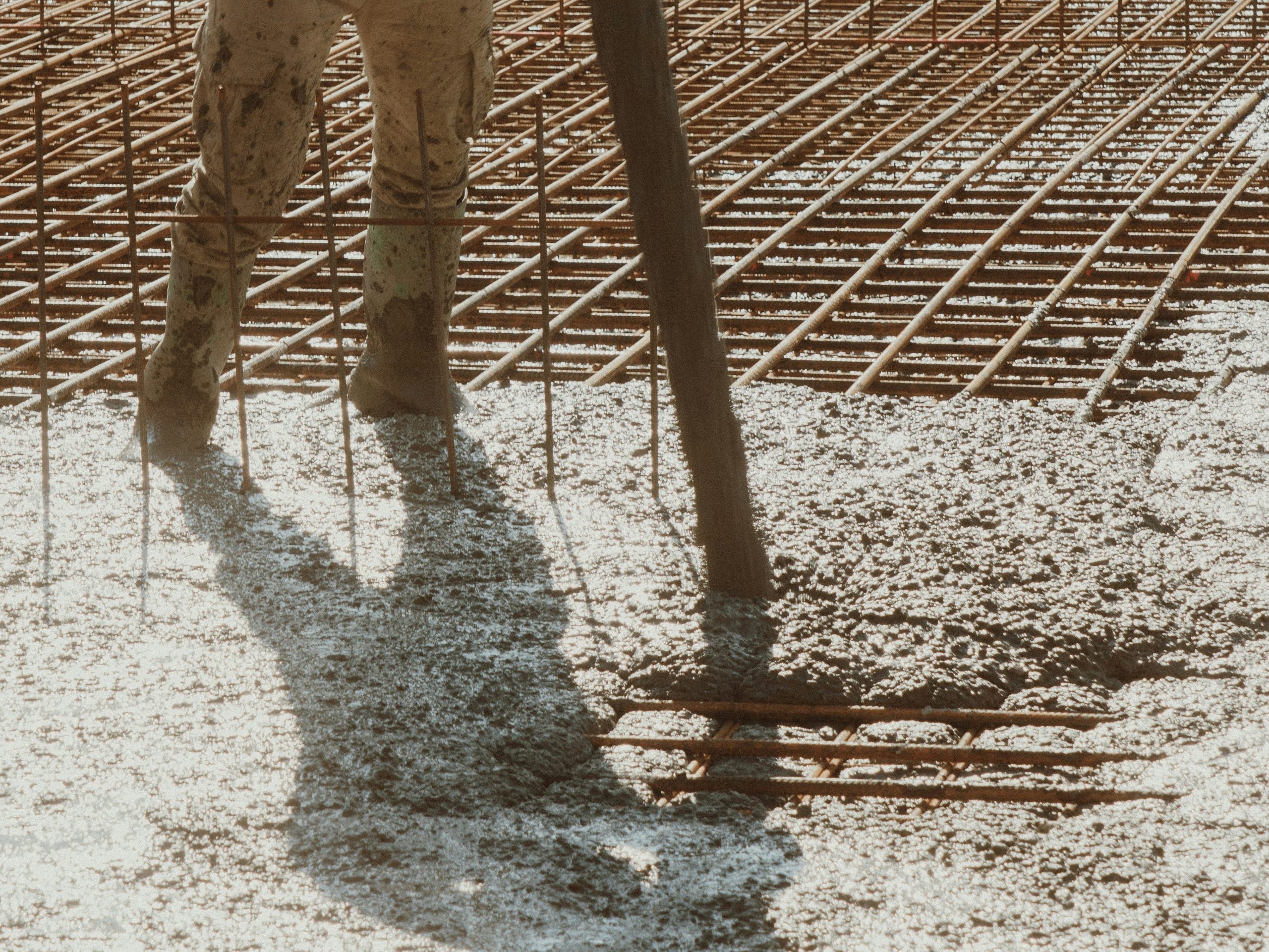
After the pour, the surface is floated and finished to spec. Footings below grade get a rough finish; any exposed concrete gets the appropriate surface treatment for its use. Concrete reaches initial set within hours but requires 7–28 days to reach full design strength[3] – we communicate cure expectations clearly before you schedule subsequent trades.
Once cured, we strip the forms and do a final walkthrough with you. Any concerns get addressed before we leave the job.
Concrete footing and foundation work sits firmly in professional territory for most projects – but here’s an honest breakdown.
What people do wrong: Footings are poured at a convenient depth rather than the required depth, typically to save on excavation time and material.
Why it’s a problem: Any moisture in soil above the frost line will freeze in winter. Frozen soil expands with significant force – enough to crack concrete and shift entire structures.
The right approach: Dig to at least 24–30 inches in Central Missouri. Verify the required depth with your local building department for your specific project type.
What people do wrong: Concrete is poured directly onto recently excavated, loose soil.
Why it’s a problem: Loose soil compresses under load over time, causing the footing to settle unevenly. Differential settlement – where one side sinks more than another – is especially damaging to masonry and rigid framing.
The right approach: Compact the base after excavation. For poor soils, a gravel base layer (typically 4–6 inches of compacted crushed stone) improves drainage and bearing capacity.
What people do wrong: Footing width is guessed rather than calculated based on soil bearing capacity and structural load.
Why it’s a problem: A footing that’s too narrow concentrates load on less soil surface area. In softer soils common in parts of Central Missouri, this leads to settlement.
The right approach: Size footings based on the load above and the bearing capacity of your soil. When in doubt, wider and thicker is safer than minimum dimensions.
What people do wrong: Concrete is poured without rebar or mesh because it “looks like it’ll be fine.”
Why it’s a problem: Unreinforced concrete has good compressive strength but poor tensile strength. Any flexion – from soil movement, frost, or loading – causes cracking. Reinforcement holds cracks together and prevents separation.
The right approach: Install rebar or wire mesh per the project spec. On most residential footings, #4 rebar at 18-inch centers is a standard starting point.
Concrete footings and foundations don’t get second chances. Once they’re poured and backfilled, correcting a problem means excavating the structure back down to grade – an expensive, disruptive process that’s entirely avoidable with the right prep work and depth from the start.
Hoover’s Bobcat Service has been pouring footings and foundations for homeowners and builders throughout Central Missouri – Versailles, Eldon, Jefferson City, and the rural communities in between. We handle the site prep, forming, reinforcement, pour, and finish, so you have one crew coordinating the entire base of your project.
If you’re planning a build and need a foundation pouring contractor you can trust, contact us to get a quote. No runaround, no vague estimates – just a straight answer on what your project needs and what it’ll cost.
Most of Central Missouri sits in a frost depth zone of approximately 24–30 inches[1]. That means footings for any permanent structure need to be poured with their base at or below that depth to prevent frost heave. Your local building department can confirm the specific requirement for your county and project type.
A footing is the widened concrete base that sits below grade and transfers structural load into the soil. A foundation is the wall or slab that sits on top of the footing and forms the base of the structure above grade. Both are concrete, but they serve different structural roles – the footing bears the weight, and the foundation walls define and enclose the structure’s base.
Concrete reaches initial set within a few hours but gains strength over time. It typically achieves 70% of its design strength within 7 days and reaches full design strength at approximately 28 days[3]. Most contractors schedule follow-on trades – framing, block work – after the 7-day mark at minimum. In cold weather, curing slows significantly; protective measures may be required to maintain adequate curing temperatures.
In most Missouri counties, yes. Any foundation associated with a habitable structure or a substantial outbuilding will require a building permit, and the foundation work will need to pass inspection. Requirements vary by county – Versailles and Morgan County have their own permitting processes. Contact your county building department before breaking ground.
Yes, with precautions. Concrete should not be poured when ambient temperatures are at or below 40°F without cold-weather practices in place – including heated enclosures, insulating blankets, and accelerated mix designs. Fresh concrete that freezes before it reaches adequate strength can lose more than 50% of its potential strength[4]. We evaluate weather conditions before scheduling pours and take appropriate measures when temperatures are marginal.
A full footing pour service typically covers layout and excavation, base compaction, form setting, rebar or mesh installation, concrete placement, consolidation, finishing, and form removal after cure. Some contractors split excavation from forming and pouring – Hoover’s Bobcat Service handles the full scope so you’re not coordinating multiple crews.
Footing costs vary based on linear footage, depth, footing dimensions, reinforcement requirements, and site conditions. A straightforward strip footing for a small garage or outbuilding typically runs in the range of $15–30 per linear foot installed, though complex projects with challenging site conditions will run higher. The best approach is a site visit so we can give you an accurate, project-specific quote rather than a ballpark that may not reflect what your job actually requires.
Serving Versailles, Jefferson City, Eldon, Warsaw, Clinton, Lake Ozark, Camdenton, Rocky Mount, Sunrise Beach, and surrounding Central Missouri communities.
| Website By ZIMMERMAN | Privacy Policy